 Tuoro sul Trasimeno
 Montefeltro
 Medieval Markets in the Village
 The Ca’ Rossa Experience: from vineyard to glass
 La Rustìda in Gabicce Monte: the authentic flavour of the Adriatic, where sea, hills and tradition meet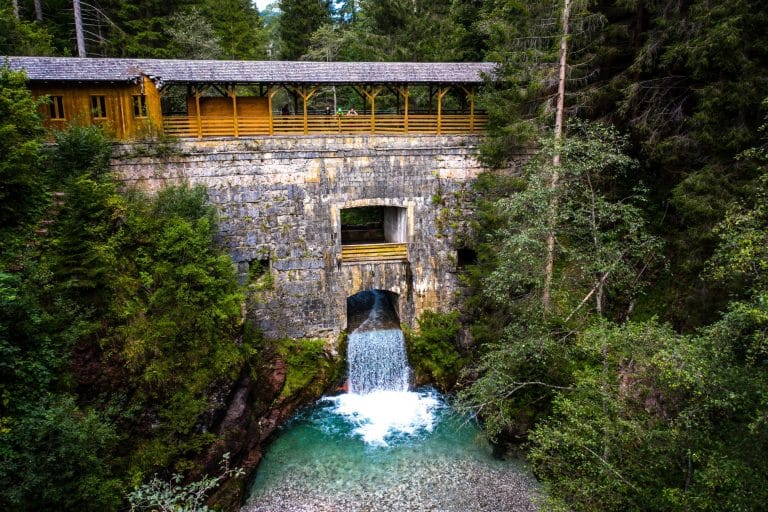


In the heart of the Belluno Dolomites, on the border with Austria and Trentino-Alto Adige, the Val Comelico is an unspoilt valley where the mountains still retain the unhurried pace of tradition. Here, ancient woods, timber-framed villages and the spectacular peaks of the Dolomites intertwine with a history stretching back a thousand years, shaped by Ladin culture, sacred art and ancient crafts.
Visiting Val Comelico means discovering a land where every village tells a story: Gothic churches decorated by great masters, museums that preserve the memory of Alpine communities, and palaces that recall the centuries when the timber trade linked these mountains to the Most Serene Republic of Venice.
The villages of Val Comelico
The valley is made up of small villages that retain a strong connection to Alpine traditions. Each has its own distinct character, characterised by traditional architecture, history and breathtaking views.
Candide, the oldest village in the area, is first mentioned in records dating back to 1186, when the Counts of Camino signed the deed of sale for Mount Ombrio. Today it preserves important historic buildings such as Casa Gera and Casa Giacobbi, former residences of influential families from the Comelico area. The village is also home to the Church of Santa Maria Assunta, famous for its historic organ, and the charming Church of Sant’Antonio Abate, built in the 16th century by the master builder Nicolò Roupel.

Chiesa Sant’Antonio Abate
Just above Candide lies Casamazzagno, a small village at the foot of Mount Spina. Here stands the splendid Church of San Leonardo Vecchio, which offers spectacular views over the valley. In the village centre, you can also visit the “La Stua” Ethnographic Museum, which illustrates the daily life of mountain families.
 Museo Etnografico “La Stua”
Dosoledo, on the other hand, has a different architectural style to the other villages in the valley: following the devastating fires of the 19th century, it was rebuilt almost entirely in stone. The village still boasts ancient wooden tabià and the 17th-century Palazzo Zandonella – Dell’Aquila, now home to the Algudnei Museum, dedicated to Ladin culture and traditions.

Museo Algudnei
Padola and the tourist heart of the valley
Padola is now one of the main towns in the Val Comelico and a gateway to the Dolomiti Superski ski area. Following the fires of the past, the village was rebuilt in 1860 according to an urban design by the architect Segusini, with the buildings arranged in a cross-shaped layout around the central square.
Here you can visit the Church of St Luke the Evangelist, which houses works by Tommaso Da Rin and Cesare Vecellio, and the Comelico Alpine Culture Museum, which holds over four thousand artefacts relating to Alpine life. In the vicinity of the village lies the Stua on the Padola stream, an ancient lock once used to transport logs down the valley.

Museo della Cultura Alpina e Ladina (affresco Calabrò)
Danta di Cadore: nature and prehistory
Halfway between Cadore and Comelico lies Danta di Cadore, a village with very ancient origins. Inhabited since the 6th century by people from the Puster Valley, it retains a peaceful and authentic atmosphere to this day.
Among the main attractions is the “Le Radici della Vita” Palaeontological Museum, which houses the complete skeleton of one of the oldest dinosaurs ever discovered. From the village, you can also reach the panoramic Church of Santa Barbara, which overlooks the valley and offers one of the most striking views of the Dolomites. Nearby are also the Danta peat bogs, natural environments rich in biodiversity that can be explored via easy hiking trails.
 Museo Paleontologico “Le Radici della Vita”
San Nicolò and Santo Stefano di Cadore
The municipality of San Nicolò di Comelico takes its name from the church dedicated to Saint Nicholas the Bishop, which dates back to the 12th century and is famous for its exquisite frescoes. The village played a very important role in the history of the Cadore region: during the Napoleonic period, it was in fact home to one of the region’s administrative districts.
Not far away lies Santo Stefano di Cadore, historically the hub of the timber trade in the valley. Today, the village is an ideal destination for winter tourism and for lovers of ski mountaineering. Among its most important buildings is the Church of Santo Stefano, which preserves architectural features from different eras.

Chiesa di Santo Stefano di Cadore
San Pietro di Cadore and the Venetian villa in the Dolomites
At the eastern end of the Val Comelico lies San Pietro di Cadore, the valley’s easternmost municipality, surrounded by the peaks of Monte Terza Piccola, Monte Peralba and Monte Zovo.
The village’s landmark is Palazzo Poli – De Pol, built between 1665 and 1668 and considered the northernmost Venetian villa ever constructed. This imposing building bears witness to the commercial ties between Cadore and Venice. In the centre of the village stands the Church of St Peter the Apostle, whilst in the nearby hamlet of Costalta you can visit the ‘Angiul Sai’ Ethnographic Museum, situated within one of the valley’s most characteristic villages, famous for its wood carvings.
 Villa Poli
Val Comelico is a place where nature, history and culture coexist in perfect harmony. From ancient villages to Gothic churches, from ethnographic museums to examples of Alpine engineering, every corner tells the story of the deep bond between man and the mountains.
People come here not just to admire the Dolomites, but to discover a valley that still preserves the authentic spirit of the Alps.
On the cover: La “Stua” sul torrente Padola


Do you want to promote your business on e-borghi?
Reach travellers interested in villages, authentic experiences and quality tourism.
Discover how to become a partner